B2B Sales
Top AI Tools for Behavioral Sales Coaching
Mar 6, 2026
Compare leading AI platforms that analyze calls, emails, and meetings to deliver real-time coaching, role-play practice, and post-call insights for sales teams.
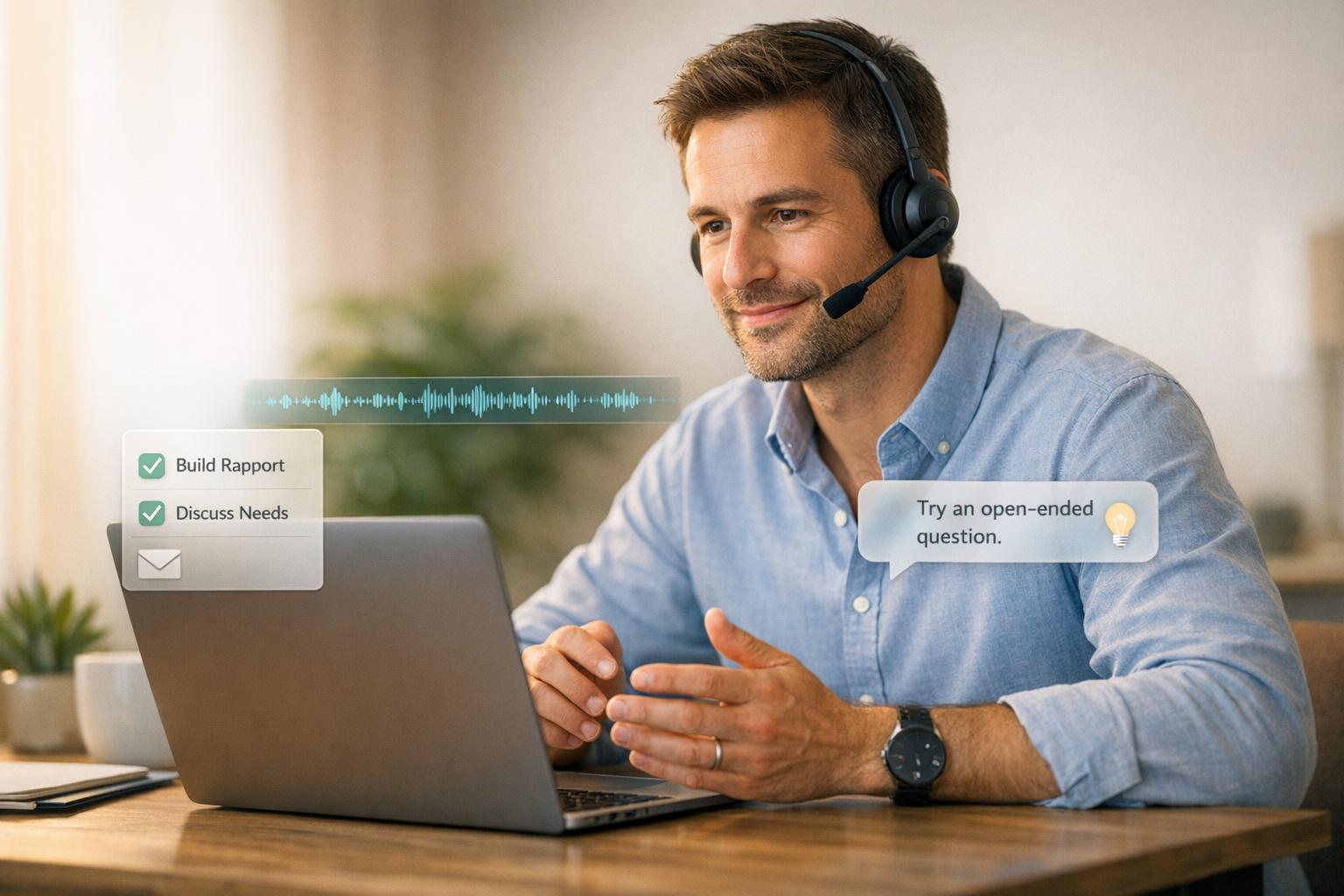
AI tools are transforming sales coaching by analyzing 100% of interactions - calls, emails, video meetings - to improve performance. These tools provide real-time feedback, track metrics like talk-to-listen ratios and objection handling, and integrate seamlessly into workflows. Companies using AI report a 50% increase in win rates, 40% productivity gains, and faster onboarding.
Key Tools:
Coach Pilot: Real-time guidance embedded in workflows, boosting pipeline growth and quota attainment.
Gong: Deep analysis of sales conversations with actionable insights for enterprise teams.
Hyperbound: Practice simulations with dynamic buyer personas to improve skills.
Mindtickle: Combines training and conversation analysis for large-scale readiness programs.
Chorus: Tracks live interactions to identify deal risks and coaching opportunities.
Quick Comparison:
AI coaching tools save managers time, improve rep performance, and drive revenue growth. The right tool depends on your team’s needs - real-time guidance, post-call analysis, or skill-building simulations.
How to Use AI as Your Personal Sales Coach
Why AI Tools Work for Behavioral Sales Coaching
AI tools are transforming behavioral sales coaching by offering precise analysis of every interaction. Through natural language processing (NLP) and machine learning, these platforms capture and interpret sales conversations across phone calls, video meetings, and emails. They track key conversational metrics, replacing a manager's subjective "gut feeling" with data-backed insights that directly link to individual performance and sales outcomes [5]. Here’s why AI has become a game-changer in sales coaching.
Data-Driven Feedback Without Bias
Traditional coaching often depends on the manager's personal approach, with some focusing on tone and others on objection handling. AI eliminates this inconsistency by providing objective, consistent evaluations for every interaction. Automated scorecards ensure all sales reps are measured against the same criteria, such as methodologies like MEDDIC or BANT [4].
These tools also deliver real-time guidance during live calls. For example, AI cue cards help reps handle objections or respond to competitor mentions in the moment [5]. This immediate and impartial feedback allows reps to adjust their approach during the call itself, avoiding delays that come with waiting for post-call reviews.
Coaching That Scales Across Teams
AI doesn’t just improve individual feedback - it scales coaching across entire teams. By analyzing 100% of sales interactions [3], AI tools help businesses drive measurable improvements in sales performance. Companies using AI coaching report a 20% to 25% boost in rep proficiency and reductions in new hire ramp times by 30% to 50% [6][7].
Take Diligent, for example. In 2026, they implemented Gong across their sales teams and saw a 7.4% increase in close rates on reviewed calls. New reps hit their quotas three weeks faster, generating an additional $45,000 in revenue per new hire [9]. By automating repetitive tasks like call summaries and feedback, AI frees up managers to focus on high-impact coaching rather than manual data analysis [3].
Built Into Existing Sales Workflows
AI coaching tools fit seamlessly into daily workflows, making it easier to act on behavioral insights. These tools integrate with CRMs like Salesforce and HubSpot, automatically updating fields with next steps, customer feedback, and methodology details. Some even push insights into platforms like Slack or Microsoft Teams, creating virtual deal rooms for real-time collaboration [4].
For example, in 2026, Precina, a healthcare company, used Salesforce's Agentforce to train clinicians for patient intake calls. The AI provided a continuous learning environment, offering real-time feedback on compliance, empathy, and accuracy - all within their CRM workspace [1].
"Conversation intelligence tools will be the single most important AI investment for sales organizations in the coming years." – Forrester [5]
Top AI Tools for Behavioral Sales Coaching
AI tools are revolutionizing how sales teams improve their skills and performance by leveraging behavioral metrics. These platforms don't just analyze data - they actively guide and train sales reps to excel. Let’s explore some standout options.
Coach Pilot
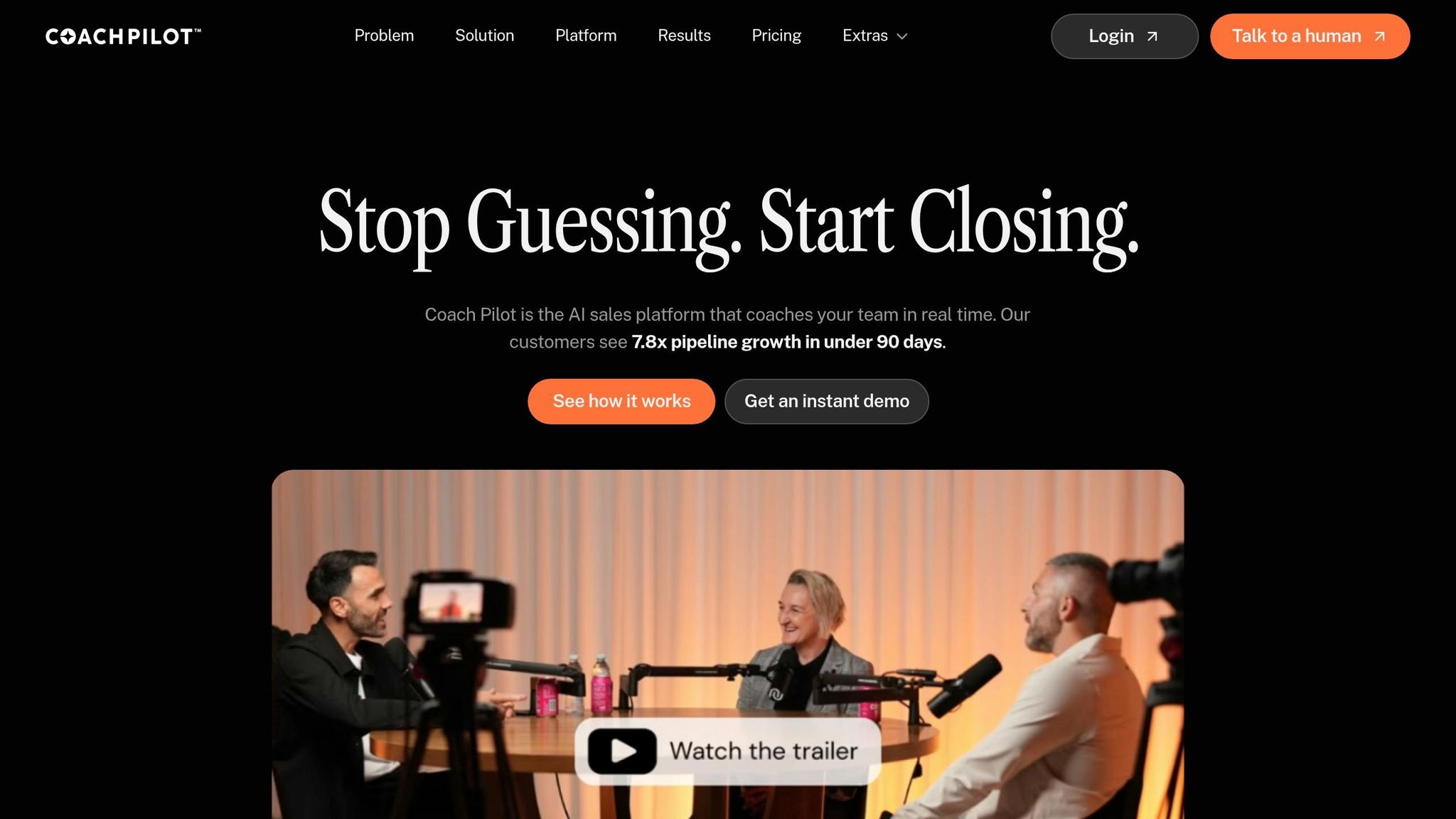
Coach Pilot takes a hands-on approach by embedding an AI coach directly into your workflow. Instead of just presenting stats like "65% talk time", it provides actionable guidance, such as, "Email the CFO by Thursday with this message." This approach transforms traditional PDF playbooks into dynamic "Living Playbooks." Companies using Coach Pilot have reported impressive results, including 7.8x pipeline growth in 90 days, a 39% increase in quota attainment, and saving 19.5 hours per week per rep [10]. Its real-time coaching capabilities set it apart in the behavioral coaching space.
Gong
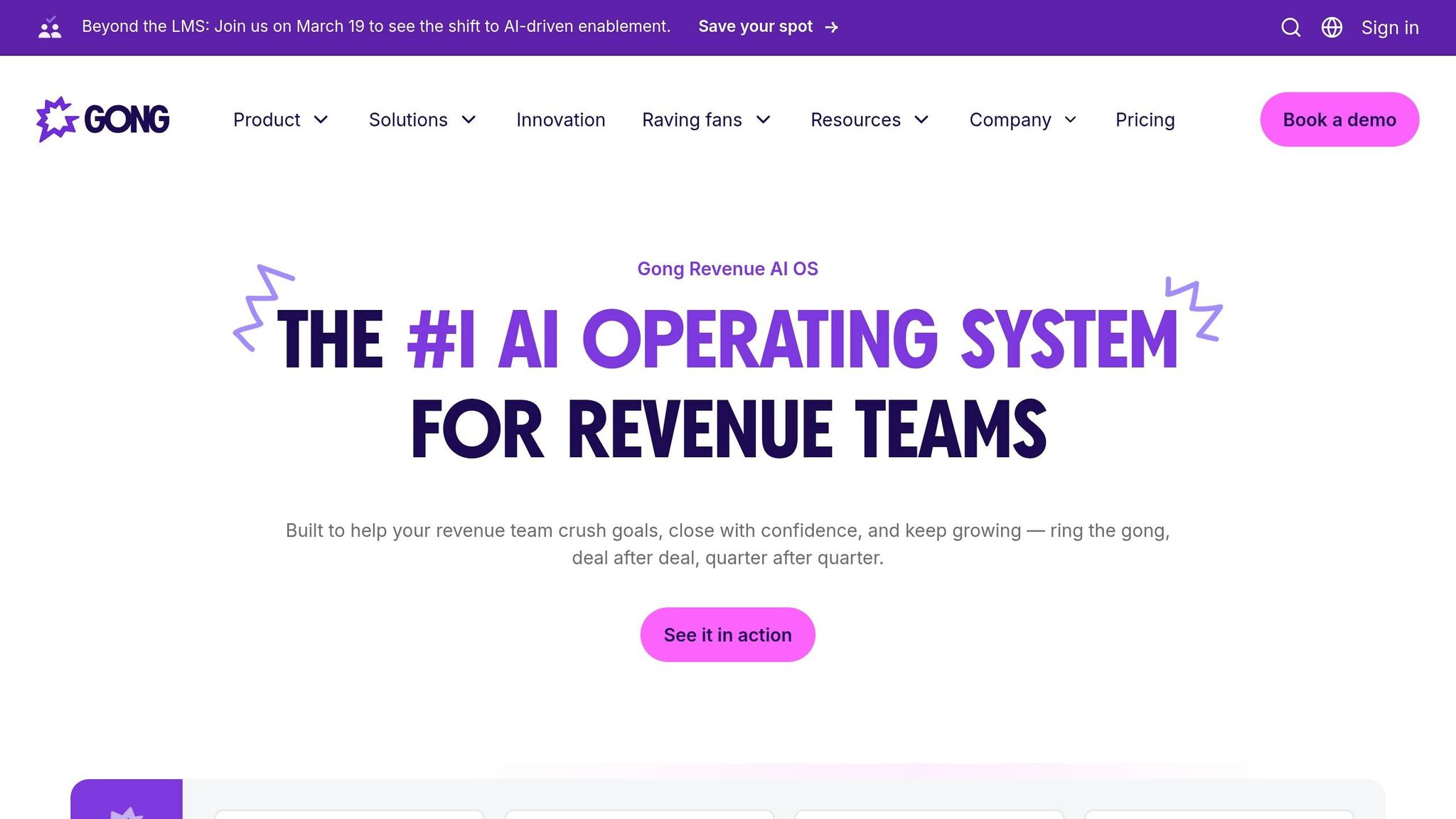
Gong’s Revenue AI OS dives deep into every sales conversation, uncovering key behavioral patterns like talk-to-listen ratios, sentiment shifts, and mentions of competitors. These insights are turned into realistic role-play scenarios, helping reps refine their skills. Its AI Call Reviewer even scores calls based on your sales methodology [9][15]. With a stellar 4.7/5 rating on G2 from over 6,200 reviews [12], Gong is a favorite for teams looking to blend analysis with practical training.
Hyperbound
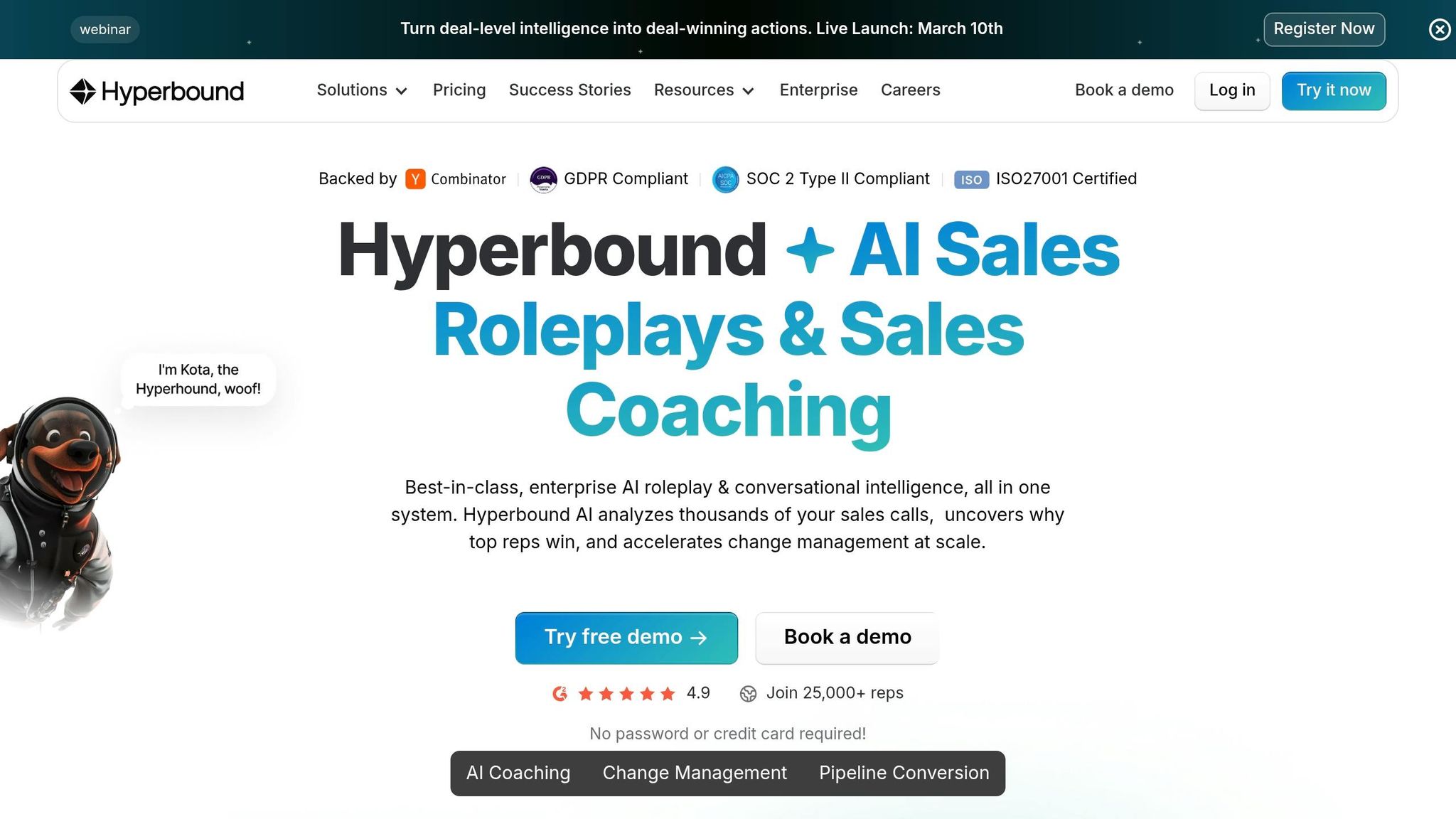
Hyperbound offers hyper-realistic role-play simulations designed to sharpen sales reps’ skills without risking real prospects. It features dynamic buyer personas such as "Sassy", "Rude", and "Nice", which adapt based on how reps interact during practice sessions. A simulated autodialer also helps reps perfect their call blitz techniques [11][14].
"Hyperbound is a game changer for sales teams. When I was training and managing BDRs, my biggest bottleneck was coaching time... Hyperbound completely relieves this bottleneck" [11].
Supporting over 25 languages, Hyperbound can reduce new hire ramp time by 50% and boasts a 4.9/5 rating on G2 [11]. Its focus on realistic practice makes it invaluable for sharpening skills.
Mindtickle
Mindtickle combines role-play simulations with conversation intelligence to power its "Readiness Index", which pinpoints skill gaps and tailors training modules accordingly. By analyzing both practice sessions and real interactions, it provides detailed feedback to help reps improve. Cisco used Mindtickle to train 18,000 sellers in just six weeks, leading to a 31% boost in average deal size. Similarly, Janssen India halved their ramp time by centralizing training on the platform. Mindtickle’s recognition as a top vendor in the 2025 Gartner Critical Capabilities for Revenue Enablement Platforms underscores its impact [13].
Chorus
Now part of ZoomInfo, Chorus specializes in analyzing live sales interactions to offer actionable recommendations. It tracks adherence to talk tracks, identifies where deals stall, and highlights coaching opportunities. By integrating with major CRMs, Chorus automates updates for next steps and customer sentiment, reducing manual effort while ensuring insights are seamlessly incorporated into workflows. This focus on live interaction makes it a powerful tool for real-time behavioral coaching.
How to Choose the Right AI Tool for Your Sales Team
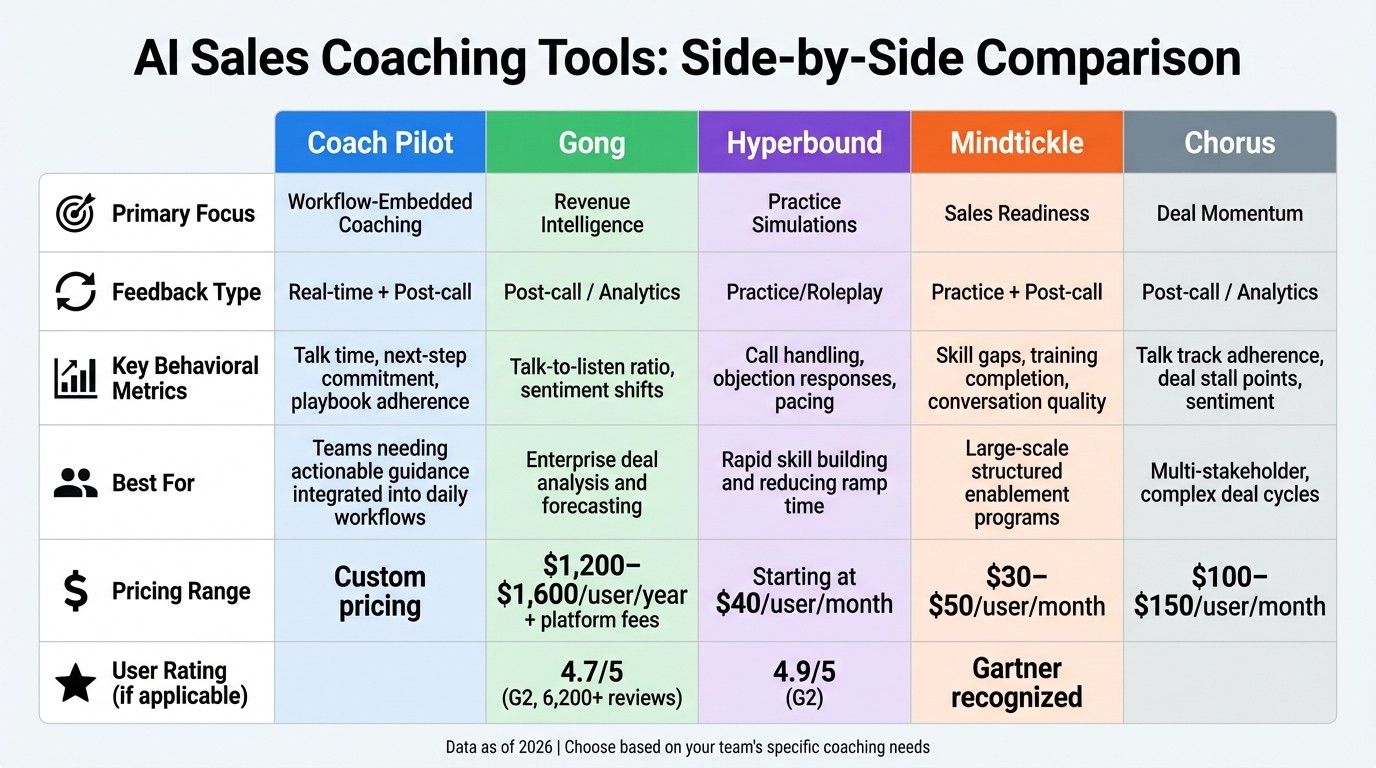
AI Sales Coaching Tools Comparison: Features, Pricing & Best Use Cases
What to Consider When Choosing a Tool
Selecting the right AI tool for your sales team can make a big difference in turning behavioral insights into better sales outcomes. Start by pinpointing your team's primary coaching needs. Are live calls a pain point, requiring real-time prompts? Or is the issue more about identifying trends through post-call analysis? Maybe your team needs help developing skills before calls even happen. Different tools are designed to excel at specific stages like live guidance, after-the-fact analysis, or practice sessions [16][2].
Next, zero in on key behavioral metrics that align with your sales goals. Pick 2–3 behaviors that directly impact closed deals - like the quality of discovery questions or how often next steps are secured [17]. Look for tools that track both verbal behaviors (e.g., talk-to-listen ratio, filler words, monologues) and non-verbal signals (e.g., tone, pacing, sentiment) [8][18].
Integration with your workflow is crucial for smooth adoption. Prioritize tools that connect easily with your CRM, such as Salesforce or HubSpot, to ensure automatic data syncing. Manual data entry can bog down your team, so verify the tool works seamlessly with your CRM and sales engagement platforms like Outreach or Salesloft. Before committing, map out your sales process and confirm the tool aligns with your existing systems [16][17].
Think about implementation speed and team size as well. Large-scale solutions might take longer to set up, while lighter tools can often be up and running quickly. Pilot testing is a smart approach - it can increase satisfaction rates by 63% and reduce failure rates by 41% [19]. Use a 30-day pilot to track key metrics and establish a baseline before rolling out the tool fully [19].
Finally, consider manager efficiency. The right AI tool can save managers significant time - automating call reviews and scoring can cut coaching time by as much as 83% [8]. With sales reps spending only 35% of their time actually selling due to administrative tasks [19], automation is key to freeing up time for managers to focus on strategic coaching.
The table below breaks down how leading tools compare across these factors.
Comparison Table of Behavioral Sales Coaching Tools
Conclusion
AI-driven tools have transformed behavioral coaching by providing immediate, data-backed support. Instead of relying on delayed, subjective feedback, sales reps now receive real-time guidance during live calls. With AI analyzing over 140 verbal and non-verbal cues, coaching has become more scalable, objective, and effective than ever before [20][18].
The results speak for themselves: teams using AI coaching experience 37% faster onboarding, 24% higher win rates, and managers reclaim 83% of the time they used to spend on manual coaching [20]. Companies that combine AI with structured sales playbooks see even greater success, achieving 41% higher win rates and 29% higher quota attainment [23]. These numbers highlight the undeniable revenue impact of AI-enhanced coaching.
"The intelligence layer is where AI delivers the most immediate, measurable impact - and it's the layer most teams skip" [21].
The real question isn't whether your team needs AI coaching - it’s how much potential revenue is being left on the table by waiting. Traditional training methods fall short for 79% of organizations, while AI-driven teams are 3.7x more likely to hit their quotas, bridging the gap between strategy and execution [20][22].
To harness this potential, Coach Pilot integrates AI-driven coaching directly into your team's workflow. With custom playbooks, real-time guidance, and tailored training, Coach Pilot helps translate strategy into action - boosting win rates, shortening sales cycles, and delivering tangible results. Discover how Coach Pilot can transform your sales outcomes at coachpilot.com.
FAQs
Which behaviors should we coach first?
To create a successful sales team, start by focusing on core behaviors that foster trust and deliver results. Emphasize active listening, truly understanding customer needs, and demonstrating empathy. These abilities not only build stronger client relationships but also make every interaction more meaningful.
In addition, work on reinforcing practical skills like effectively handling objections, keeping a balanced talk-to-listen ratio, and tailoring communication based on customer signals. When these basics are mastered, your team will be better prepared to tackle advanced strategies, such as managing key accounts and crafting personalized follow-ups.
How do AI coaches stay compliant and secure?
AI coaches play a key role in maintaining compliance and security by sticking to strict data privacy rules like GDPR. They use measures such as encryption, secure storage, and controlled access to safeguard sensitive information. Many platforms also come equipped with compliance tools to help businesses stay on top of industry regulations. By incorporating privacy-first principles and keeping a close eye on potential vulnerabilities, AI coaches ensure the protection of sales and customer data while staying within legal boundaries to avoid any regulatory issues.
What does a 30-day pilot need to prove ROI?
A 30-day pilot needs to deliver measurable results by showing its effect on key metrics like win rate, sales cycle time, pipeline hygiene, and revenue growth. The goal is to clearly connect coaching efforts to noticeable improvements in sales performance within this period.
Related Blog Posts

Remove the guesswork from winning more deals.