B2B Sales
AI Tools for Role-Playing in Sales Coaching
Mar 3, 2026
AI role-play makes sales coaching scalable with on-demand practice, tailored simulations, instant feedback, and measurable gains in ramp time and win rates.
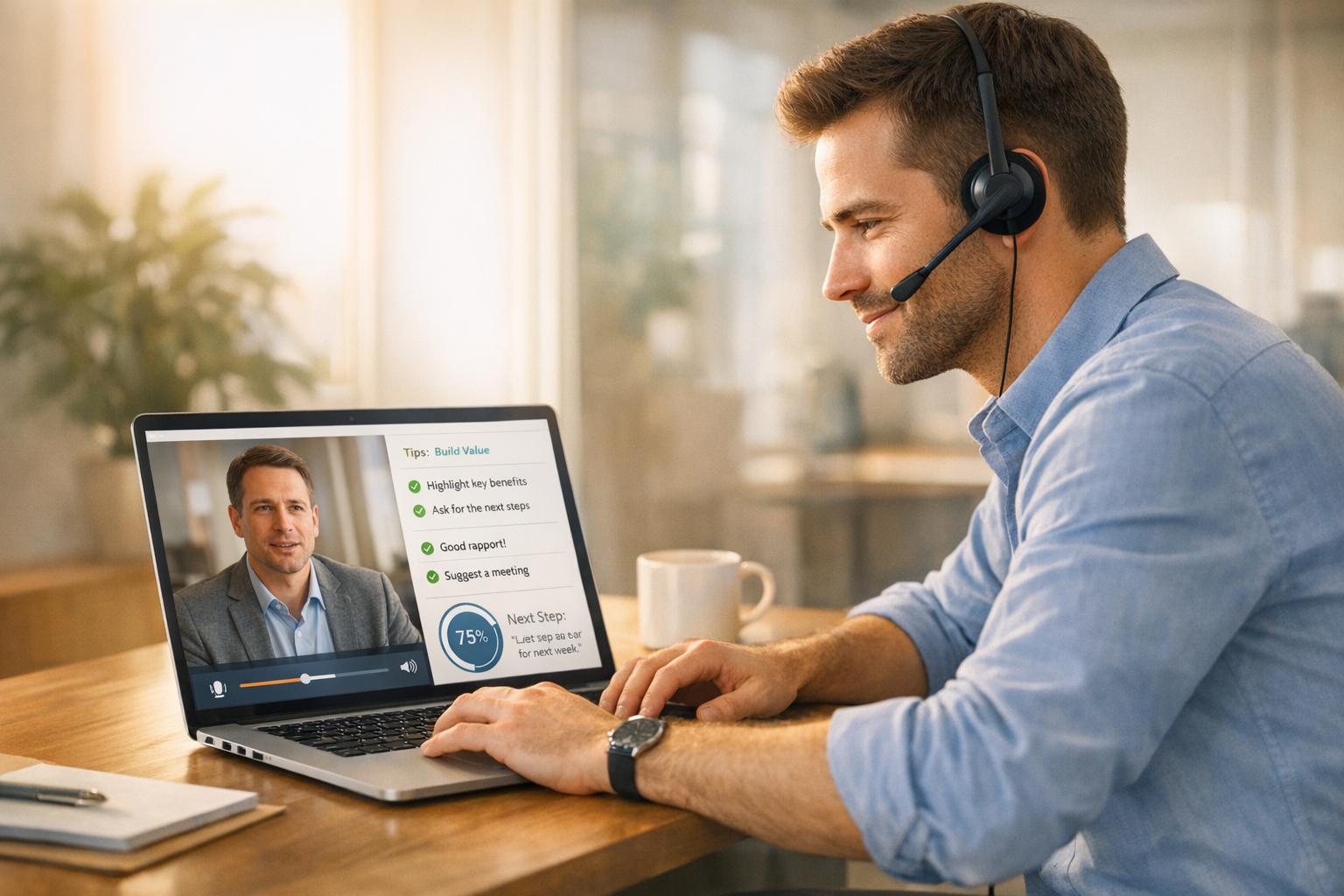
AI is transforming sales coaching by making role-playing more accessible, efficient, and effective. Traditional role-playing methods often fall short due to limited practice opportunities, inconsistent feedback, and discomfort among participants. AI addresses these challenges by offering:
On-Demand Practice: Reps can train anytime in a private, low-pressure environment.
Personalized Scenarios: AI uses real sales data and CRM insights to create tailored simulations.
Immediate Feedback: AI provides unbiased, structured feedback on verbal and non-verbal cues.
Scalable Training: Teams can practice more frequently without relying on manager availability.
Companies using AI for sales coaching report faster ramp-up times (up to 50% reduction), higher quota attainment (up to 39%), and improved win rates (20-45%). Tools like Coach Pilot take it further by integrating real-time coaching, custom playbooks, and detailed analytics into everyday workflows. AI-driven role-playing is helping sales teams close more deals, faster.
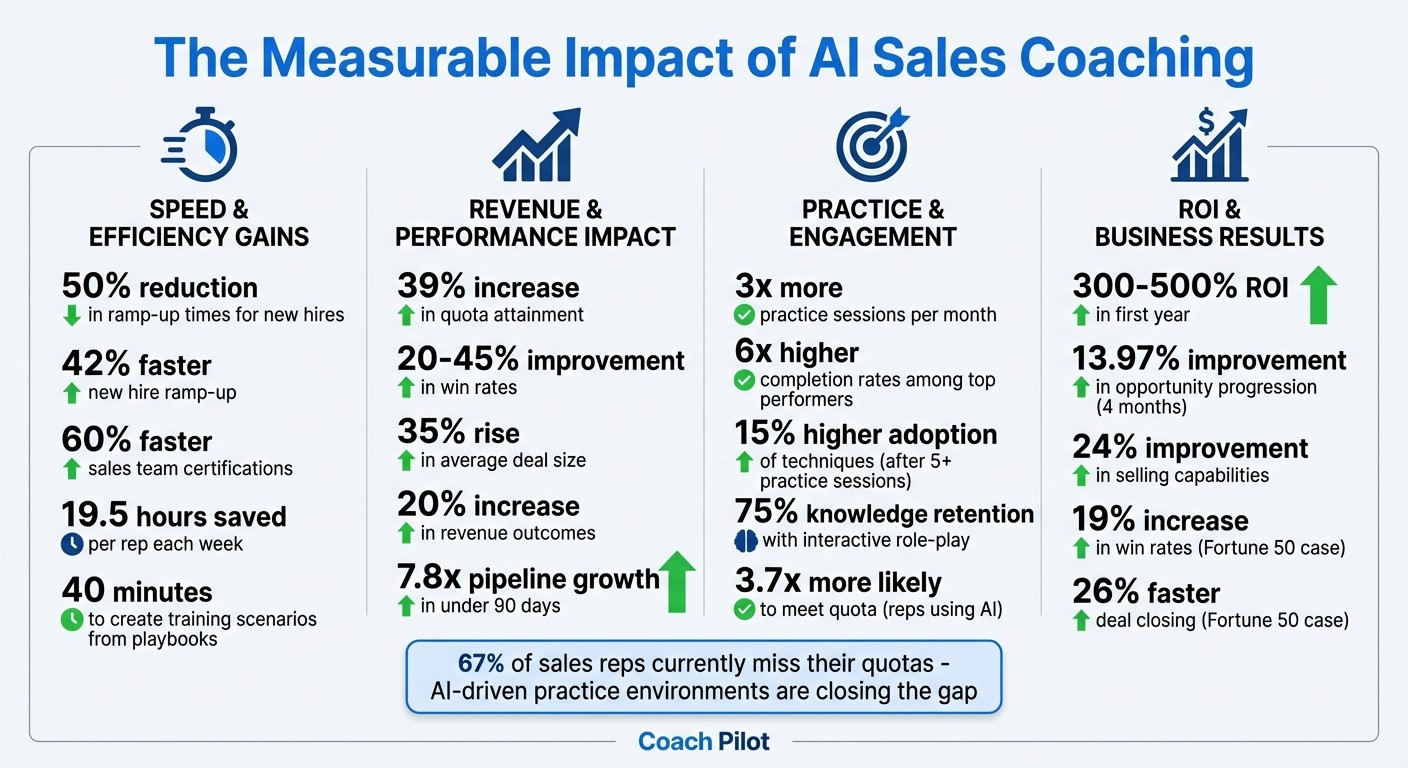
AI Sales Coaching Impact: Key Performance Metrics and ROI Statistics
SDR Cold Call AI Coach Demo: Practicing Real Prospect Conversations Before Talking to Customers
Benefits of AI Tools in Role-Playing
AI tools are reshaping how role-playing exercises are conducted, offering more tailored and practical solutions. These tools address common challenges like limited practice opportunities, inconsistent feedback, and subjective evaluations. With AI, sales teams can practice more frequently and effectively, leading to noticeable performance improvements.
Personalized and Realistic Scenarios
AI tools create simulations by pulling from your own sales resources - like playbooks, call recordings, product guides, and competitor insights [9] [10] [5]. Rather than practicing generic sales techniques, reps rehearse the exact messaging and strategies they’ll use in real-world conversations. Some platforms even integrate directly with your CRM, allowing reps to prepare for specific upcoming calls with prospects [9] [10].
These tools allow for detailed customization of the AI persona, including buyer traits, resistance levels, and decision-making tendencies. Using natural language processing, the AI adjusts its responses based on a rep's tone, hesitation, or choice of words [10] [5] [6] [2]. Some systems can even interpret screen shares or sales materials, mimicking the feel of a real digital sales call [9]. Studies show that interactive role-play training can enhance knowledge retention by up to 75%, and teams using AI for role-play complete over three times as many practice sessions per month. The result? Higher win rates and shorter sales cycles [10].
"Reps told us they felt more prepared walking into HCP conversations. They weren't just certified - they were confident."
– Kathy Driscoll, Associate Director, Brand Franchise Training, Bayer [9]
Instant Feedback and Coaching
AI tools go beyond realistic scenarios by delivering immediate, unbiased feedback. They analyze both verbal and non-verbal cues, such as facial expressions, eye contact, and tone of voice. These tools also assess conversational elements like talk-to-listen ratios, timing, and the balance between questions and statements [6] [5]. Some platforms even use frameworks like "Warmth + Competence" to help reps gauge how well they convey trust and expertise during interactions [6].
After each session, reps receive a detailed scorecard comparing their performance to established sales methodologies like SPIN, Challenger, or MEDDIC. These evaluations highlight whether key messaging and value points were effectively communicated [6] [1] [5]. Companies using AI-driven coaching programs have reported a 20% increase in revenue outcomes and a 35% rise in average deal size [4].
Training More Teams Without Losing Quality
AI removes the limitation of manager availability, enabling teams to practice anytime with consistent standards [10] [5]. Generative AI can turn sales playbooks into realistic training scenarios in under 40 minutes [5].
In 2025, Bayer implemented AI role-play across its sales teams. Peter Frank, Director of Cardio Renal and Women's Health Franchise Training, shared that the tool allowed them to scale their training efforts while maintaining quality [9]. That same year, Paycor used AI feedback to refine their coaching strategy, achieving a 23% boost in sales quota attainment [4]. Novartis utilized AI personas to train dispersed teams, keeping their training schedules on track without pulling reps away from their day-to-day work [9].
"The ability to scale training without sacrificing quality was a game-changer for us."
– Peter Frank, Director, Cardio Renal and Women's Health Franchise Training, Bayer [9]
AI-powered role-play can reduce ramp-up time for new hires by 42% and speed up sales team certifications by 60% [9]. With 67% of sales reps currently missing their quotas, the demand for effective, AI-driven practice environments is undeniable [6].
How Coach Pilot Improves Role-Playing in Sales Coaching
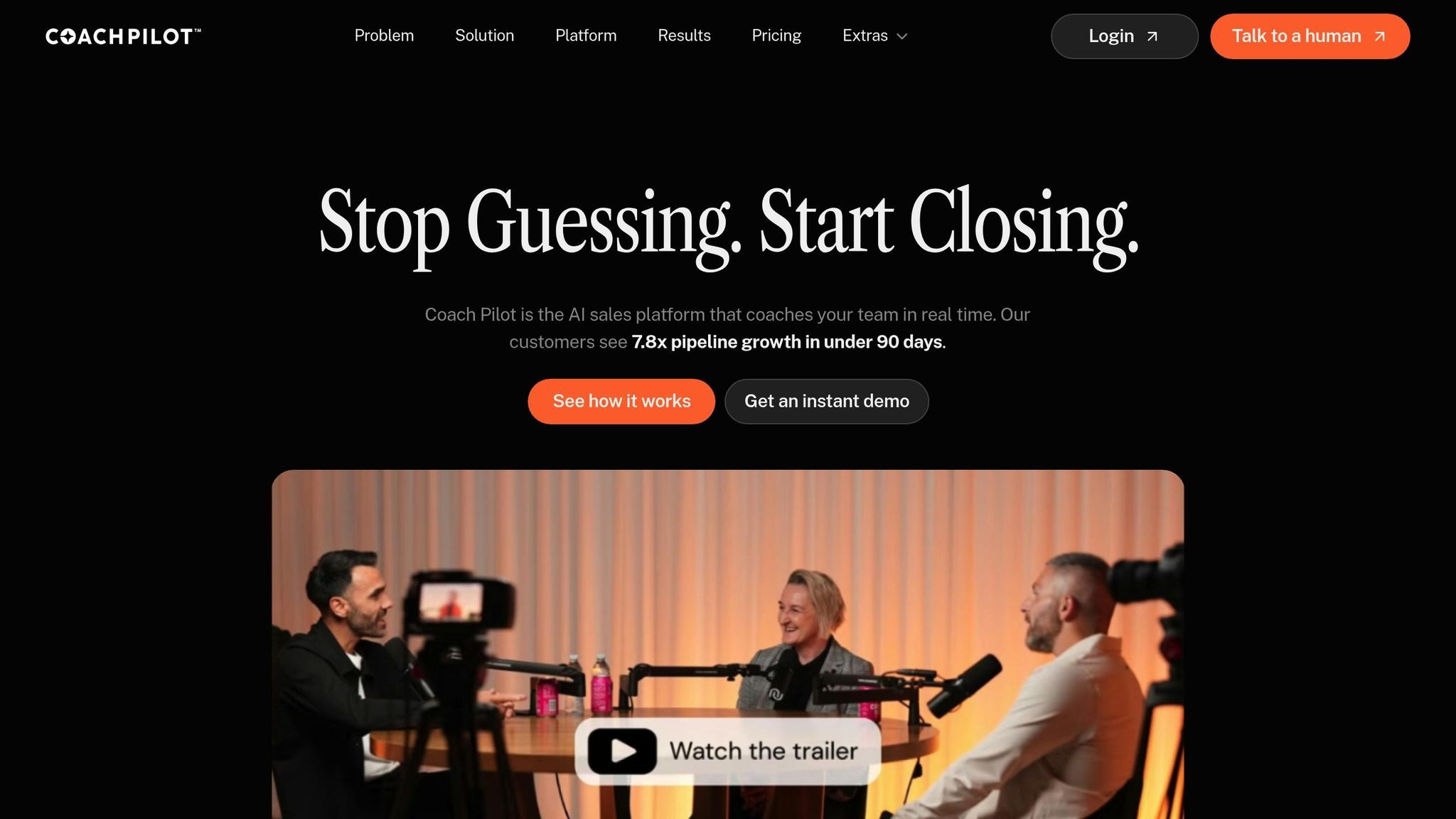
Coach Pilot takes sales coaching to the next level by integrating advanced simulations and real-time guidance into role-playing exercises. By weaving AI-driven role-playing into your sales processes, the platform uses custom sales playbooks and real deal data to create realistic simulations. These simulations reflect the nuances of your actual sales workflow - capturing key messaging and engagement strategies that have proven successful. This ensures your team practices the exact tactics they’ll need in real conversations.
Custom Sales Scenarios
Coach Pilot doesn’t rely on generic training exercises. Instead, it builds simulations directly from your sales playbooks and deal data, identifying patterns from successful transactions. These patterns include critical elements like when to negotiate pricing, how to navigate procurement, and the best way to sequence stakeholder engagement [12]. Teams can refine their playbooks to make these simulations even more effective.
The results speak for themselves: teams using Coach Pilot report a 39% increase in quota attainment, while customers see pipeline growth multiply by 7.8x in less than 90 days [12]. By tailoring simulations to your product positioning and sales strategies, the platform sets your team up for success with practical, actionable training.
Real-Time Coaching During Simulations
Role-playing with Coach Pilot isn’t just about practicing - it’s about learning in the moment. The platform provides real-time, actionable coaching during simulations, offering precise next steps that reps can follow immediately.
For example, the AI might suggest:
"Email the CFO by Thursday with this message. Call the economic buyer Friday at 9 a.m. Use these talking points that closed three similar deals." [12]
This level of guidance eliminates guesswork and helps reps adjust their approach on the fly. Beyond that, Coach Pilot saves an average of 19.5 hours per rep each week by automatically capturing deal data and reducing CRM-related admin work [12]. This combination of immediate feedback and time-saving automation makes role-playing sessions more impactful.
Performance Analytics and Tracking
Coach Pilot doesn’t just track performance - it helps close the gap between strategy and execution. Its analytics identify the "execution gap" by systematically recording deal data, tracking rep actions, and analyzing conversation outcomes [12]. Managers can use this data to pinpoint specific areas for improvement.
Unlike traditional analytics that focus on past results, Coach Pilot turns its insights into actionable instructions for future deals. This ensures every coaching session contributes directly to better performance in live sales scenarios [12].
How to Use AI-Powered Role-Playing with Coach Pilot
Coach Pilot takes the benefits of AI-driven role-playing - like tailored scenarios, instant feedback, and scalable training - and makes it easy to implement without disrupting your existing processes. Here’s how it works: start by creating a custom playbook that outlines your proven sales strategies. Then, run live workshops to build strong execution habits. After that, embed an AI coach into your workflow to provide 24/7 real-time guidance. Finally, reinforce these strategies with weekly live coaching sessions designed to fine-tune performance in high-pressure situations. Below, we’ll break down how to integrate these simulations effectively into your sales process.
If you already have a sales playbook, take the time to audit and refine it first. This ensures the AI is trained on your best tactics, maximizing its effectiveness.
Start with Discovery Call Simulations
Discovery calls are the foundation of successful sales, so they’re the perfect starting point. Use AI to create realistic buyer personas based on your Ideal Customer Profiles (ICPs). For each persona, define key details like their goals, typical objections, and preferred communication style - whether they’re formal, analytical, or skeptical. This setup provides a realistic environment where your reps can practice asking the right questions to uncover customer pain points. With low-stakes simulations, reps gain confidence and develop the skills they need for real conversations. Plus, Coach Pilot’s platform offers real-time prompts during these sessions, nudging reps to highlight key value points.
Move to Advanced Sales Scenarios
Once your team is comfortable with discovery calls, it’s time to tackle more challenging situations. These high-stakes simulations mirror critical moments in your sales cycle, such as negotiating with multiple stakeholders, reviving stalled deals, or presenting ROI to executives. For example, you can simulate scenarios where procurement pressures your team to lower prices, helping them learn to defend value without unnecessary discounts. Coach Pilot’s AI provides precise, timely guidance during these exercises, suggesting the best talking points or advising when to engage an economic buyer. The results? Teams using Coach Pilot have reported a 39% boost in quota attainment and 7.8x pipeline growth in just 90 days [12].
Combine Role-Playing with Live Coaching
AI role-playing becomes even more effective when paired with human coaching. While the AI handles repetitive drills and provides initial feedback, managers can focus on higher-level strategic coaching during weekly live sessions. This hybrid approach tackles one of the biggest challenges in training: retention. Traditional methods often see up to 84% of information forgotten within 90 days [3]. With Coach Pilot, reps also get on-demand guidance during live deals, as the platform integrates directly into your workflow. It automatically captures deal data, giving managers more time to focus on refining complex deal strategies.
Measuring the Impact of AI on Sales Coaching
When it comes to sales coaching, AI isn't just a buzzword - it’s making a tangible difference. By diving into tailored scenarios and offering instant feedback, AI has shown measurable improvements in key areas like seller engagement, skill development, and revenue growth.
Seller engagement metrics: These include tracking completion rates, frequency of practice, and time spent in simulations to evaluate how actively sales reps are using the tools [14][17].
Skill performance metrics: Metrics such as how well reps handle objections, the quality of their discovery questions, and their communication fluency offer insights into skill enhancement [13][14].
Revenue impact metrics: By linking practice sessions to outcomes like win rates, deal sizes, and the length of sales cycles, you can directly connect AI-driven coaching to revenue improvements [13][14].
The numbers speak for themselves. High-performing sales reps are completing practice sessions six times more often than their lower-performing peers [14]. Those who engage in at least five discovery pitch practices show a 15% higher adoption of these techniques during actual sales calls [13]. And within just four months, AI-powered practice has driven a 13.97% improvement in opportunity progression [15].
Here’s a real-world example: A VP of Sales Operations shared how their team used an AI platform to practice handling real prospect questions. The result? A 13.97% boost in opportunity progression in just four months [15].
Another success story comes from a Fortune 50 global tech company. With over 150,000 employees, they rolled out AI simulations to 1,200 sales reps across three organizations. These custom simulations, focusing on inside sales and strategic selling, led to a 24% improvement in selling capabilities, a 19% increase in win rates, and deals closing 26% faster [16].
To ensure these results hold up, you can use cohort analysis. Compare the top 50% of reps who completed AI practice modules with the bottom 50% [13]. Additionally, monitor whether reps are applying their practiced techniques by analyzing tracker adherence through conversation intelligence tools [13]. These strategies help validate the effectiveness of AI-driven coaching and ensure it translates into real-world success.
Conclusion
AI-powered role-playing is transforming how sales teams approach training, breaking away from the limits of traditional methods. By shifting from scheduled coaching sessions to 24/7 on-demand simulations, sales reps gain access to constant, realistic practice. No longer held back by manager availability or concerns about peer judgment, they can refine their skills in a safe space where mistakes turn into growth opportunities [18].
The impact of this shift is clear. Companies using AI role-play report an impressive 300% to 500% ROI in the first year, alongside a 40% to 60% reduction in new hire ramp times [18]. Sales reps who incorporate AI into their routine are 3.7 times more likely to meet their quota [7], and consistent practice leads to win rates improving by 20% to 45% [8].
"Scaling coaching with instant feedback on every roleplay has been a game-changer, driving real results in our team's performance." – Brandon Bornancin, CEO, Seamless.ai [11]
Coach Pilot takes these benefits even further by seamlessly embedding AI-driven role-playing into daily sales workflows. With features like custom sales playbooks, immersive training modules, and AI-powered coaching, the platform makes practice an integral part of everyday routines. Sales reps can fine-tune their discovery calls, objection-handling techniques, and messaging strategies before critical conversations. Meanwhile, managers gain access to performance analytics, helping them pinpoint skill gaps and provide focused, data-backed coaching that drives measurable results.
FAQs
How do I choose the best sales scenarios to role-play with AI?
When designing sales scenarios, aim for situations that align closely with your team’s goals and objectives. Focus on pivotal moments in the sales process - like onboarding, negotiations, or renewals - where your reps can make the biggest impact.
To make these scenarios effective, include specific messaging, common objections, and personas that reflect your ideal customer profile. Avoid generic, one-size-fits-all situations. Instead, use real sales data and frequently encountered objections to create scenarios that feel authentic and relatable.
It's also important to build flexibility into these scenarios. They should adapt to various customer responses, allowing reps to practice handling unexpected challenges. This approach not only sharpens their skills but also helps them develop the resilience needed to navigate real-world conversations successfully.
What data should I use to personalize AI role-plays without risking privacy?
To tailor AI role-plays while ensuring privacy, it's crucial to rely on anonymized or aggregated data that excludes any personally identifiable information (PII). This approach allows you to focus on broader insights, such as deal trends, sales call patterns, and scenario-based data, without compromising sensitive details. Using synthetic or simulated scenarios derived from aggregated insights is another effective way to create realistic practice environments. The goal is to use data that mirrors actual interactions while staying compliant with privacy guidelines.
How can I prove AI role-play is improving revenue, not just activity?
AI role-playing can directly tie skill development to sales success, making its impact on revenue clear. These tools go beyond surface-level activity by analyzing specific behaviors, like how well sales reps handle objections, and linking them to key metrics such as close rates and quota achievement. By comparing revenue figures before and after training sessions, managers can demonstrate how focused coaching leads to tangible improvements. This approach ensures that role-playing contributes to actual sales growth rather than simply boosting activity levels.
Related Blog Posts

Remove the guesswork from winning more deals.