B2B Sales
Checklist for Building Personalized Sales Coaching Plans
Mar 15, 2026
Personalized, data-driven coaching focused on specific sales behaviors that turns coaching into a measurable revenue driver.
Most sales coaching programs fail because they treat everyone the same. But your sales team is made up of individuals, each with unique strengths and challenges. Personalized coaching focuses on specific, actionable behaviors - like improving how reps handle objections or ask discovery questions - to deliver better results. Using data and AI sales coaching tools, businesses can target skill gaps, leading to 36% higher win rates and 16.7% revenue growth.
Here’s how to create coaching plans that work:
Set clear objectives tied to business goals, like improving deal velocity or closing rates.
Define KPIs (e.g., talk-to-listen ratios, quota attainment) to track progress.
Evaluate skills through CRM data, call recordings, and feedback.
Build tailored plans with role-playing, peer learning, and specific timelines.
Run structured coaching sessions with proven frameworks like GROW or Did-Doing-Do.
Monitor results using dashboards and adjust plans based on performance data.
When done right, coaching isn’t just about morale - it’s a direct driver of revenue growth. This guide walks you through the steps to make your coaching efforts measurable and effective.
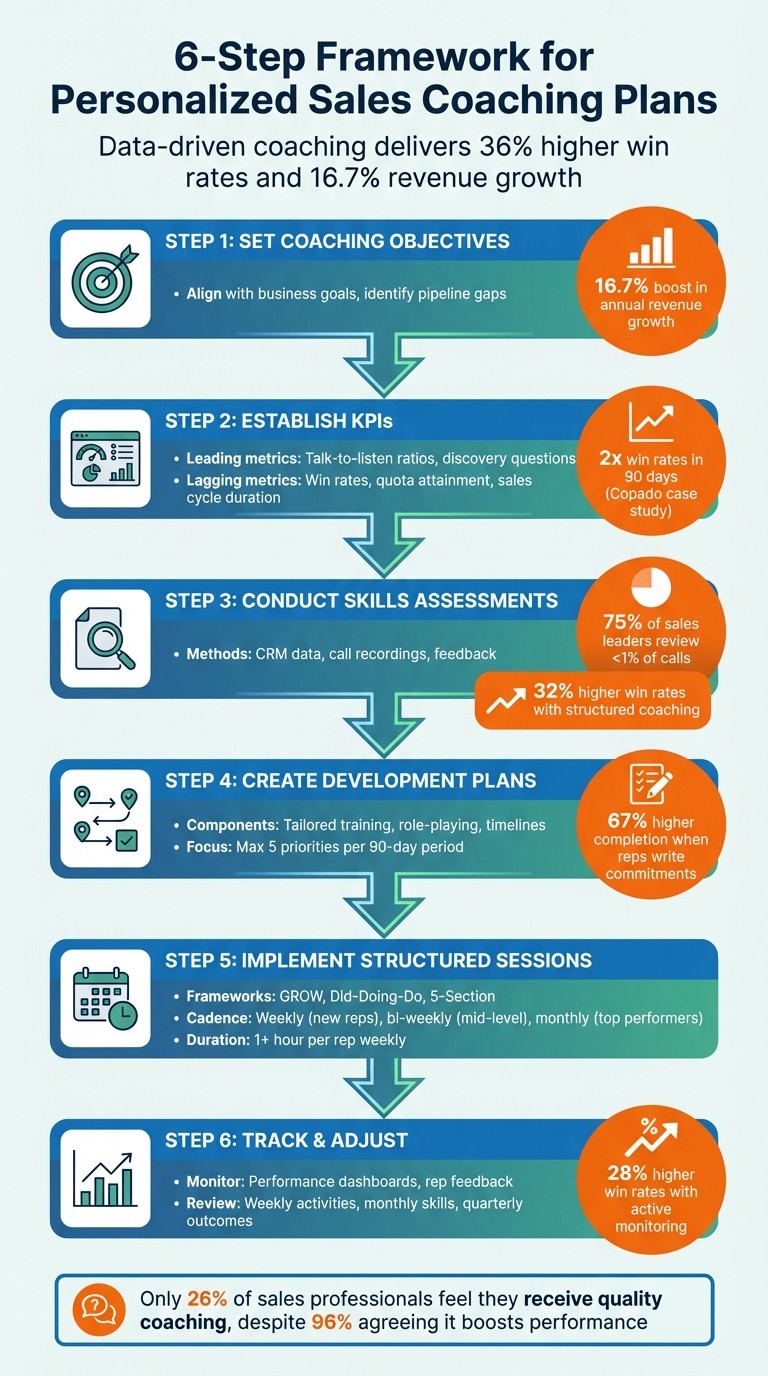
6-Step Framework for Building Personalized Sales Coaching Plans
Your 2026 Sales Action Plan | Pax8
Set Coaching Objectives and Align with Business Goals
Start by defining clear, measurable coaching objectives. Take a close look at your sales pipeline to identify where deals tend to stall - whether it's during discovery, qualification, or closing. This analysis helps focus coaching efforts on the areas that will have the greatest impact on revenue. By targeting specific pipeline gaps, you can align coaching objectives with larger business goals [3].
Your coaching goals should flow directly from your company’s broader priorities down to individual skill-building. For instance, if your organization is breaking into a new market, coaching should emphasize persona-specific discovery techniques tailored to that segment. On the other hand, if your team struggles with forecast accuracy, focus on coaching around stakeholder mapping. This is especially critical since deals involving multiple decision-makers take 84% longer to close [7]. When coaching efforts are tied to business outcomes, they become more than just a morale booster - they become a proven revenue driver. Companies with structured coaching programs report a 16.7% boost in annual revenue growth [8].
"If you don't know where you're going, any road will get you there. If you want your sellers to perform at the peak of their potential, it's essential to know the specific objectives you need to help your team achieve."
– Andy Springer, Chief Client Officer, RAIN Group [1]
Establish Key Performance Indicators (KPIs)
To measure success, define KPIs that include both leading metrics (actions and behaviors you can coach) and lagging metrics (the business results you want to achieve). For example, leading metrics might include talk-to-listen ratios, the number of discovery questions asked, or how often reps use specific talk tracks. Lagging metrics, on the other hand, could focus on quota attainment, win rates, or sales cycle duration [9].
Structured coaching frameworks can deliver impressive results. In January 2026, John Guerriere, Copado's Director of Revenue Enablement, shared that implementing a coaching strategy through SalesHood doubled their win rates in just 90 days, while also increasing average deal sizes and helping more sellers meet their targets [3].
Before launching your coaching program, establish baseline metrics to track progress over time [11]. Instead of vague goals like "improve deal velocity", set specific, measurable targets, such as reducing the average deal cycle by 10 days or increasing first-call conversion rates by 15% [6]. Use a tiered review system to maintain focus: track activity metrics weekly, evaluate skill development monthly, and assess performance outcomes quarterly [12]. This cadence ensures coaching efforts stay aligned with what actually drives results.
Once your KPIs are in place, make sure individual goals feed into these broader metrics.
Link Individual Goals to Team Objectives
Each rep’s development plan should connect directly to team and company goals. Tailor coaching priorities by role: Account Executives might focus on improving win rates and shortening sales cycles, while Sales Development Reps could target booking more meetings and improving qualification rates [3].
For example, in November 2025, Nokia leveraged CloudTalk Analytics to track performance for 200 agents. By identifying gaps and adjusting workflows in real time, they achieved a 10% productivity boost within just a few weeks [2].
Encourage reps to take ownership of their development by identifying areas where they can make the biggest impact, rather than dictating objectives from the top down [1]. When reps write down their commitments and share them with their manager, completion rates increase by 67% [14]. A helpful tool is the "Do Differently" framework: document what each rep is currently doing, what they need to change, and the specific impact that change will have on team objectives. For instance, increasing weekly prospecting time from 3 to 8 hours could double pipeline creation [1].
Conduct Skills Assessments and Identify Gaps
Once coaching objectives are in place, the next step is to evaluate your team’s skills using precise data to uncover areas for improvement. CRM data can be a goldmine for spotting where deals tend to stall, helping you identify specific skills that need work. For instance, if deals frequently fall apart during the discovery phase, it could indicate that your team struggles with uncovering customer pain points effectively [2][3].
Here’s a startling statistic: 75% of sales leaders review less than 1% of calls, leaving a massive blind spot. Structured, data-driven coaching can fill this gap and improve win rates by up to 32% [15][16]. The secret is blending objective performance metrics with direct input from your team - both reps and managers.
"There are no bad salespeople, only bad coaches. It's the coach's job to understand what a rep needs in order to be successful - and deliver it."
– Mike Montague, Global Head of Content, Sandler Training [5]
Use Call Recordings and Analytics
Call recordings are an invaluable tool for understanding how reps interact with customers. By analyzing these conversations, you can uncover critical insights, such as talk-to-listen ratios (aim for reps talking 40–50% of the time during discovery calls) and how they handle objections [15][16]. AI tools like ChatGPT for Teams can even flag key coaching moments, like when a rep interrupts a buyer or misses a buying signal [8].
Interestingly, focusing on lost deals rather than successful ones can be more revealing. Failures often highlight skill gaps that might not be apparent in calls that go well [16]. To make this process manageable, aim to review 3–5 calls per rep each week, prioritizing newer team members or those still ramping up [16]. Use standardized evaluation criteria - such as Opening/Qualification, Value Communication, Objection Handling, and Closing - to ensure consistency across the team. This approach makes it easier to spot trends and focus coaching efforts where they’ll have the most impact [16].
These data-driven insights provide the foundation for meaningful, qualitative feedback from reps and their managers.
Gather Feedback from Reps and Managers
While data shows what happens during calls, feedback from reps and managers helps explain why. Involving reps in identifying their own skill gaps fosters ownership of their development. After all, choice fuels motivation - coaching that feels imposed rarely sticks [1]. Ask open-ended questions like, "What would you do differently next time?" or "What went well in that customer interaction?" to encourage reps to reflect and self-diagnose [4][5].
Managers, on the other hand, bring a broader perspective, spotting patterns and offering objectivity. Meanwhile, reps can shed light on internal challenges - like confidence issues or a lack of resources - that data alone can’t reveal [17][2]. This collaborative feedback process paints a fuller picture of performance.
Despite the benefits, there’s a disconnect: 96% of sales professionals agree coaching boosts performance, but only 26% feel they receive quality coaching [8]. Bridging this gap starts with making assessments a partnership, not a top-down directive. When reps actively participate in creating their development plans, they’re far more invested in achieving the goals. Combining these qualitative insights with hard data creates a personalized coaching strategy that drives real, measurable results.
Create Individualized Development Plans
Once you've identified skill gaps, the next step is creating tailored development plans designed to deliver measurable progress. Generic training approaches often miss the mark - customizing your coaching to address specific needs is far more effective. These plans should align closely with your KPIs and team objectives to ensure they contribute to revenue growth. The trick lies in choosing the right mix of training activities and setting timelines that encourage accountability without overwhelming your team.
This collaborative process shifts coaching from a top-down directive to a true partnership. When team members help shape their development plans, they’re naturally more committed to achieving the goals.
Select Appropriate Training Activities
The training methods you choose should directly address the identified skill gaps. For example, if your CRM data reveals that deals are stalling during the negotiation phase, role-playing exercises focused on objection handling can help. If discovery calls are the weak point, practice sessions emphasizing open-ended questioning techniques may be the answer. The most effective strategies blend multiple formats - such as role-playing, deal reviews, peer learning, and shadowing high performers - to make skills stick in practical, day-to-day scenarios.
Consider integrating AI tools for real-time coaching or automated role plays. Micro-learning - short, frequent sessions - is another great way to help your team build habits that last. Supplement these efforts with resources like playbooks, video tutorials, and case studies to reinforce learning.
Set Realistic Timelines and Milestones
Break development plans into manageable steps with clear deadlines. Focus on no more than five priorities over a 90-day period to avoid overwhelming your team. Each coaching session should end with a specific, time-bound action item. For instance: "By our next session, you will have conducted discovery on three new opportunities using the SPIN framework" [8].
Establish a regular coaching rhythm to keep the momentum going. Quick, daily 10-minute huddles can address immediate challenges, weekly 30-minute sessions can target skill-building, and monthly one-hour reviews can track progress against KPIs. This consistent schedule - prioritizing regularity over intensity - helps ensure long-term improvement.
Track both leading indicators (like behavioral changes such as talk-to-listen ratios) and lagging indicators (like win rates) to measure progress. For longer sales cycles, set specific milestones, such as stakeholder mapping, since deals with multiple decision-makers can take 84% longer to close [7]. Research shows that companies with structured coaching programs see annual revenue growth improve by 16.7% compared to those without them [8].
Assign accountability partners to help monitor progress. While you may notice early coaching results within a few weeks, meaningful performance improvements usually take 3 to 6 months of consistent effort [18].
Implement Structured Coaching Sessions
Good coaching thrives on structure. Before each session, dive into each rep's KPIs, call metrics, and dashboards to identify specific moments worth coaching on [2][14][19]. Select call segments in advance and ask reps to complete a self-assessment. This approach encourages ownership and can boost commitment completion rates by 67% [14]. Instead of analyzing entire hour-long calls, zero in on one or two specific "coachable moments" from recordings [14]. Keep it simple - focus on just one coaching topic per session to avoid overwhelming reps [14][19].
Follow a Coaching Framework
Using a structured framework can make sessions more effective. Here are three tried-and-true methods:
Did-Doing-Do model: Spend 5 minutes reviewing past commitments, 40 minutes on current priorities, and 10 minutes setting future actions [14].
GROW model: This framework - Goal, Reality, Options, Way Forward - works well for problem-solving and guiding reps to find their own solutions [14][19].
5-Section Session: A comprehensive approach, dividing time as follows: Check-in (5 minutes), Metrics review (5 minutes), Call or performance review (15 minutes), Skill development (10 minutes), and Action items with close (5 minutes) [14].
"Coaching uses questions to help reps discover solutions themselves. Feedback tells them what to do." - Demodesk [14]
Incorporate diagnostic questions like, "What would you do differently?" These questions can triple lesson retention [14][19]. By sticking to a clear structure, you can ensure each session delivers actionable insights that drive ongoing improvement.
Maintain Consistent Session Cadence
Consistency is key to building skills and accountability. The frequency of coaching should align with the rep’s experience and performance needs:
New reps (0–6 months): Weekly sessions help establish strong onboarding, foundational habits, and call discipline [14].
Mid-level performers: Bi-weekly meetings focus on improving areas like discovery techniques, negotiation strategies, and multi-threading [14][19].
Top performers: Monthly deep-dives on strategic account planning and career growth, with additional ad-hoc support as needed [14].
A bi-weekly rhythm is especially useful for making timely adjustments [19]. Regular coaching sessions, paired with a structured plan, ensure continuous feedback and improvement throughout the sales cycle. Companies that excel at coaching dedicate over an hour per rep each week, achieving better results [2][14]. To stay on track, automate scheduling to minimize disruptions during peak selling hours [2].
Track Progress and Provide Feedback
Once structured coaching sessions are in place, it’s crucial to track progress and provide feedback. This step turns coaching into a measurable process. Companies that actively monitor coaching metrics report 28% higher win rates compared to those that don’t [12].
Use Performance Dashboards
Performance dashboards are an excellent tool for gaining real-time insights into coaching effectiveness. Start with reach metrics like:
Manager Coaching Compliance Rate: The percentage of scheduled coaching sessions that are completed.
Rep Coaching Coverage: Ensures consistent engagement by tracking how many reps are being coached [10].
Next, focus on quality metrics to measure the value of coaching:
Rep Feedback Scores: Gauge how reps perceive the usefulness of sessions.
Confidence Uplift: Assess whether reps feel more prepared and confident after coaching [10][11].
To connect coaching efforts with financial outcomes, track metrics like:
Win Rate Delta: Compare the success rates of coached reps versus uncoached reps.
Pipeline Lift per Coached Rep: Measure the revenue impact of coaching [10][20].
Behavioral changes are just as critical. Use tools like conversation intelligence to monitor indicators such as:
Talk-to-Listen Ratio: Aim for reps to talk 65–75% of the time.
Question Rate: Track how often reps ask thoughtful questions.
Objection Handling: Evaluate how effectively reps handle objections [10][20].
Dashboards should focus on identifying areas for improvement, not assigning blame [21]. Platforms like Coach Pilot streamline this process by offering integrated dashboards that deliver actionable insights in real-time. Pair these insights with direct feedback from reps to create a complete coaching loop.
Incorporate Rep Feedback
While dashboards provide the data, rep feedback adds a personal touch to the coaching process. Reps can offer unique perspectives on what’s working and what’s not. Use post-session surveys to gather Rep Feedback Scores, which reflect how valuable reps found each session [10]. Comparing reps’ self-evaluations with manager assessments can also reveal blind spots and help recalibrate their self-awareness [13].
To measure how well feedback is being implemented, track the Feedback Implementation Rate - the number of recommendations followed through divided by the total recommendations given [22].
Encourage reps to take the lead in discussions by ensuring they do most of the talking (65–75% of the time) [10]. Shift from statements like, "Your close rate is down", to open-ended questions such as, "What patterns from successful deals can we replicate?" [21].
Keep the focus manageable by tackling 2–3 high-priority skill gaps at a time. This prevents reps from feeling overwhelmed and allows for steady progress [12][20]. Celebrate improvements in areas like learning speed and process refinement, not just revenue outcomes [21]. When reps feel ownership over their development plans and see clear progress, their motivation to succeed increases significantly [1].
Evaluate and Adjust Coaching Plans
Data-driven coaching isn't just a one-time effort - it requires ongoing evaluation and fine-tuning to keep driving performance forward. Regularly assessing your coaching plans ensures they stay effective and relevant.
Review Program Effectiveness Against KPIs
Begin by comparing your current outcomes to the baseline metrics you set before launching the coaching program. Focus on both leading indicators - like call quality, next-step compliance, and pipeline velocity - and lagging indicators - such as win rates, quota attainment, and revenue growth. While leading indicators predict future performance, lagging indicators reveal the financial impact.
To truly understand coaching's effectiveness, consider using a control and cohort design. This method compares the results of a coached team against a similar uncoached team, giving you a clearer picture of the program's value.
Plan quarterly or bi-annual meetings with stakeholders to review how the program is affecting your KPIs. Use these sessions to identify trends and adjust your strategy based on data and feedback. For instance, if underperformance stems from a skill gap, additional training might be needed. If it's an execution issue, focus on accountability. And if motivation is the problem, reexamine your incentive structures. Organizations that actively track coaching metrics report 28% higher win rates than those that don’t [12].
These insights will help you refine your coaching approach over time.
Build a Culture of Continuous Improvement
Using the insights from your KPI analysis, adapt your coaching strategies to meet evolving business needs. Quarterly coaching cycles can help keep your approach fresh and aligned with current challenges. Ensure every coaching session addresses a specific commercial issue, such as pipeline leaks, stalled deals, or low win rates, to maintain a clear connection to your revenue goals.
Feedback is key. Gather input from both sales reps and managers to understand what’s working and what needs tweaking. Encourage reps to identify their own high-impact areas for improvement - they’re more likely to commit to plans they’ve helped shape. Additionally, directors and second-line managers should observe frontline managers to ensure coaching practices are being applied consistently across the team.
To track progress, maintain a "Commitments Log" where reps document the actions they agree to during coaching sessions. Reviewing these logs quarterly can reveal which behaviors are sticking and where further adjustments are needed.
For a more streamlined process, consider tools like Coach Pilot. Solutions like this can help you monitor performance metrics and integrate continuous, data-driven coaching into your sales operations effortlessly.
Conclusion
Creating personalized sales coaching plans is not a one-and-done task - it’s a continuous journey that fuels team development and delivers measurable results. It begins with setting clear, revenue-focused objectives and progresses through skill evaluations, tailored development plans, structured coaching sessions, and ongoing tracking and refinement. Each step lays the foundation for a systematic yet adaptable approach that can respond to shifting market dynamics.
The next critical piece of the puzzle is using the right tools and methodologies. For instance, AI-driven coaching has been shown to significantly boost win rates, while structured coaching programs can elevate sales performance by 8% [3].
What sets the most effective coaching programs apart? They rely on data, are scalable, and seamlessly integrate into daily workflows. Instead of guessing or relying on infrequent check-ins, high-performing teams use data to identify exactly where each rep needs guidance. This deliberate approach ensures that every coaching interaction drives real, measurable progress.
FAQs
What KPIs should I track for sales coaching?
When it comes to sales coaching, tracking the right metrics is essential to measure success and identify areas for improvement. Here are some key performance indicators (KPIs) that can provide valuable insights:
Win Rate: This measures the percentage of deals that close successfully. It’s a direct reflection of how effective your sales team is at converting opportunities into wins.
Ramp Time: This tracks how long it takes for new sales reps to reach full productivity. Shorter ramp times often indicate effective onboarding and coaching processes.
Cycle Time: This is the average length of the sales cycle. A shorter cycle time can signal streamlined processes and strong coaching strategies.
Forecast Accuracy and Pipeline Health: These metrics assess the reliability of sales forecasts and the progression of deals through the pipeline. They help ensure that coaching efforts align with realistic goals and opportunities.
Activity Metrics: These include tracking call reviews, participation in coaching sessions, and the use of sales tools. Such metrics shed light on how engaged reps are with the coaching process and their overall activity levels.
By monitoring these KPIs, you can gauge how well coaching efforts are working and pinpoint areas that need adjustment to drive better results.
How do I quickly identify each rep’s biggest skill gaps?
To effectively identify skill gaps, leveraging data-driven, competency-based tools is key. Methods like scorecards, AI-powered analysis, and structured assessments can streamline the process, making it both efficient and precise.
For example, reviewing sales conversations, recorded calls, and behavioral metrics can uncover specific areas where improvement is needed. These insights are not just general observations - they allow you to pinpoint exactly where coaching efforts will have the greatest impact. By focusing on these targeted areas, you can optimize training and development strategies, ensuring your team grows where it matters most.
How often should coaching sessions happen per rep?
When it comes to coaching sessions, there’s no one-size-fits-all formula. However, keeping them regular and consistent is crucial for boosting sales performance. Many recommend holding sessions weekly or bi-weekly to maintain steady support and provide timely feedback. Ultimately, the frequency should align with your team’s unique needs and objectives to drive progress and keep the momentum going.
Related Blog Posts

Remove the guesswork from winning more deals.