B2B Sales
How Real-Time Tracking Improves Sales Performance
Mar 10, 2026
Real-time tracking transforms sales with live dashboards, faster lead response, AI coaching, better forecasting, and higher conversion and win rates.
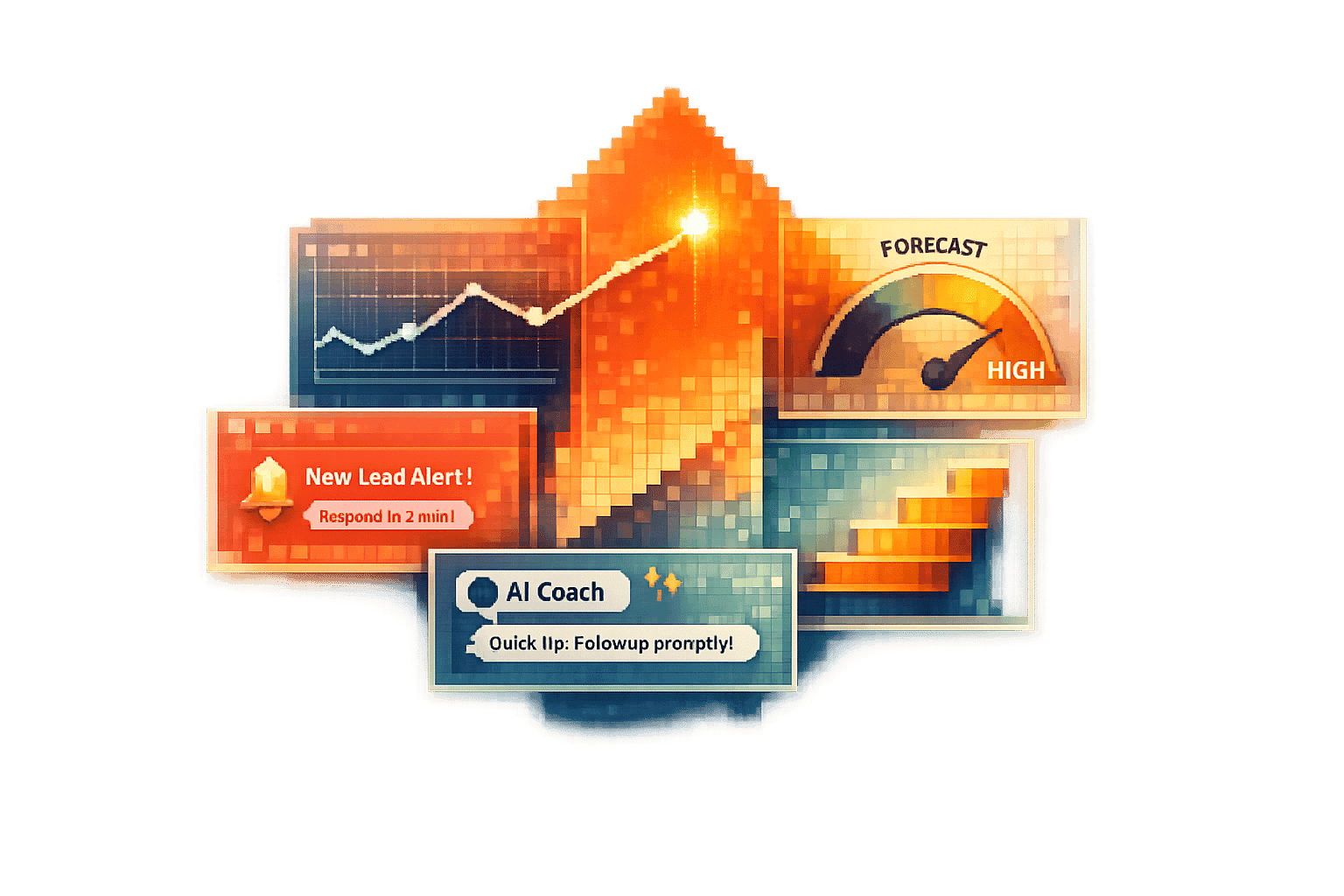
Real-time tracking is transforming sales by giving teams immediate insights into activities, helping them act faster and more effectively. Here's why it matters:
Only 28% of sales reps hit their quotas in 2023, partly due to outdated systems and delayed data.
Real-time dashboards provide instant updates on deals, buyer signals, and team activities, reducing reliance on weekly reports.
Companies responding to leads within an hour are 7x more likely to qualify them.
Automated tools eliminate manual data entry, saving time and improving accuracy.
Real-time systems improve forecasting, shorten sales cycles, and boost win rates.
Sales teams using real-time tracking report a 30% improvement in effectiveness and a 37% higher lead conversion rate. This approach ensures decisions are based on live data, not guesswork, giving businesses a critical edge in competitive markets.

Real-Time Tracking Impact on Sales Performance: Key Statistics and Benefits
What Real-Time Performance Tracking Means
Defining Real-Time Performance Tracking
Real-time performance tracking gives businesses continuous, up-to-the-minute insights into sales activities, customer interactions, and market trends [8][9]. Think of it like a GPS for your sales team - it recalculates in real time, showing reps exactly where they stand relative to their daily or weekly goals [2].
Unlike older systems that rely on manual data entry, this approach uses automated tools to capture updates as they happen. Streaming mechanisms (such as event queues) log calls, emails, and meetings automatically, so dashboards reflect actual efforts - not just what salespeople remember to input [5][4].
But here’s the key: real-time tracking isn’t just about how often metrics refresh. It’s about ensuring the underlying data - like contact details, deal stages, and buyer signals - is always current and verified [5]. Without fresh, accurate data, even the most polished dashboards are just visual representations of outdated information.
This automated, always-updated system stands in sharp contrast to traditional methods.
Real-Time vs. Traditional Reporting
Traditional sales reporting relies on batch processing. Data gets collected manually and analyzed at scheduled intervals - whether weekly, monthly, or quarterly [6][8]. Managers then make decisions based on these historical snapshots, often reacting to issues well after they’ve occurred. This creates gaps where opportunities can slip through unnoticed [4].
Real-time tracking flips this approach on its head. It gives instant visibility into what’s happening right now, enabling managers to make adjustments on the fly instead of waiting until it’s too late [11][12]. For instance, if a high-value prospect revisits your pricing page or a deal has stalled for two weeks, you’ll know immediately - not during next week’s pipeline review [4][8].
Here’s a quick comparison of the two approaches:
Feature | Traditional Reporting | Real-Time Tracking |
|---|---|---|
Data Collection | Manual entry; batch processing at set intervals [8] | Automated, continuous updates [8] |
Frequency | Weekly, monthly, or quarterly reports [6] | Instant, real-time updates |
Decision Making | Proactive, driven by live buyer signals [8] | |
Accuracy | Prone to data decay (2.1% per month) and human error [5] | High accuracy with automated syncing [4] |
Visibility | Limited visibility between reporting periods [4] | Full "GPS-like" view of current activity [2] |
The difference is striking. Sales teams using real-time tools, like mobile CRMs, have achieved 26% higher quota attainment compared to those relying on traditional methods [4]. And responding to leads within an hour using live data makes you seven times more likely to qualify them [4]. Real-time tracking doesn’t just speed things up - it ensures accuracy and eliminates guesswork, giving teams the ability to act decisively and improve results.
Benefits of Real-Time Tracking for Sales Teams
Better Visibility and Transparency
Real-time tracking clears up the guesswork that often clouds sales management. Instead of waiting for end-of-week or monthly reviews to uncover stalled deals, managers gain immediate insights into team activities. Features like GPS-verified field tracking show precisely which territories are being covered and which are overlooked, providing a clear picture of team execution [4][3].
This level of visibility offers a comprehensive view of daily sales activity [3][2]. Automatic syncing of activities - such as calls, emails, and meetings - gives managers objective data to work with. This shifts discussions from vague observations to measurable metrics like meeting conversion rates and territory coverage [10].
With 91% of organizations citing accountability as a top training priority, having real-time, objective data makes coaching discussions more effective. Tools like public dashboards and leaderboards further amplify this by allowing reps to see how their peers are performing, fostering a sense of achievement and healthy competition [2]. Managers can also identify and address bottlenecks early - for instance, spotting a rep who excels at setting up meetings but struggles with closing deals - before the quarter ends [1][4].
Next, let’s look at how real-time data enhances forecasting and decision-making.
More Accurate Sales Forecasting
Real-time tracking takes the guesswork out of forecasting by relying on live pipeline data. Deal stages update automatically, engagement signals are captured in real time, and forecasts reflect the current state of sales activity.
AI-powered predictive analytics, fueled by real-time data, can cut forecasting errors by 20–30% [4][3].
"Accurate sales forecasting starts with fundamentals: a reliable CRM, a clearly defined sales process, measurable goals, and a clean, up-to-date pipeline. When your data reflects real activity - not assumptions - forecasting becomes a strategic advantage, not a guessing game."
Duston Santana, VP Sales, Act! [13]
These systems also act as an early warning system for potential revenue gaps. By combining historical conversion rates, rep commitments, and AI-driven deal health signals, such as push counts, managers can proactively address issues [14][15]. Precise forecasts allow finance teams to make informed decisions about hiring, inventory, and marketing budgets before the quarter ends. For companies with investor oversight, disciplined forecasting is non-negotiable. As Carl Eschenbach, Partner at Sequoia Capital, puts it:
"It takes many, many years to gain credibility for your forecasts and your ability to deliver the number. You can lose it all in 90 days with a single miss."
Carl Eschenbach, Partner, Sequoia Capital [16]
Data-Driven Coaching and Development
Real-time tracking doesn’t just improve visibility and forecasting - it transforms coaching. Instead of focusing on what went wrong after the fact, managers can intervene during critical moments and guide reps in real time.
These systems flag behaviors like dominating conversations, skipping key questions, or delaying deals, allowing managers to act immediately. Features like call whispering enable managers to provide silent, real-time feedback during calls [1]. For instance, when a prospect mentions budget concerns, managers can prompt reps to ask about ROI on the spot.
Companies have seen measurable results from this approach. Bureau improved its discovery process through real-time coaching, leading to a 30% increase in deal conversions [7]. Versa Networks used behavior data alongside pipeline metrics to cut coaching time in half while ensuring consistency across their global team [7]. Live feedback during calls has been shown to boost close rates by over 12% [12], and AI-driven coaching tools have helped teams achieve an average 7% lift in closure rates [17].
"Real-time coaching doesn't just improve performance - it creates agile, self-improving sales teams."
The time savings are also impressive. Real-time tools can save organizations up to 13,000 hours annually by automating call reviews and CRM documentation [17]. This frees up managers to focus on strategic planning and personalized coaching. Considering that sellers typically spend only 24–28% of their week actively selling [7][18], tools that reclaim time for revenue-generating activities deliver immediate value. Platforms like Coach Pilot integrate AI-driven coaching directly into sales workflows, ensuring reps get timely guidance without diverting managers from their strategic priorities.
Real-Time Lead Tracking & Smart Follow-Ups | Nural Sales CRM
How Real-Time Tracking Reduces Sales Cycles
Delays between initial contact and closing a deal can drain revenue potential. By cutting out these delays at every stage, real-time tracking not only speeds up the sales process but also boosts overall productivity.
Faster Lead Engagement
In B2B sales, speed is critical. Real-time tracking tools monitor buyer behavior - like revisiting a pricing page, clicking on an email, or searching for competitors - and send instant alerts to sales reps for timely follow-ups.
Sales teams using these alerts convert leads at rates 37% higher than average [6]. For instance, Cisco Systems implemented a real-time AI platform in 2023 that analyzed account activity and CRM data across its sales teams. The result? A 2.5x increase in qualified meeting rates and a 22% drop in no-show appointments [6].
Automated lead routing also plays a big role in eliminating delays. Instead of letting leads sit idle, systems use methods like round-robin or territory-based routing to immediately assign prospects to the right rep [5]. Advanced tracking even measures "scroll velocity" to identify high-intent leads, prioritizing them for quicker follow-ups [6].
AI tools take this a step further by providing live guidance during calls. If a prospect mentions budget concerns or competitor comparisons, reps receive real-time prompts with strategies to handle objections. This eliminates the need for follow-up meetings, which can drag out the sales cycle [14, 23]. Companies using AI-driven, in-call feedback have seen closing ratios jump from 27% to 60% in just two quarters [19].
This kind of immediate engagement helps sales reps adapt on the fly during conversations.
Dynamic Pricing and Opportunity Adjustments
Real-time data eliminates the pauses and missteps that can stall deals. Reps gain instant access to live pricing and discount guidelines, keeping the conversation moving.
96% of sales professionals say real-time data is critical for adjusting their strategies mid-conversation [5]. These systems can also detect upselling opportunities. For example, if a cloud storage user is nearing 90% capacity, the system might prompt the rep to offer a discounted upgrade [8]. During calls, live alerts ensure reps stick to approved discount thresholds, avoiding pricing errors [14, 24].
Real-time tracking can also flag missed qualification steps or shifts in buyer sentiment during a call. This allows reps to adjust their approach immediately, rather than realizing the issue later [1, 20]. ACI Corporation saw its win rates rise from under 5% to 6.5% - a 30% improvement - after integrating real-time AI assistance into its CRM. Lead qualification rates also climbed from 45.5% to 64.1% [19].
The benefits extend beyond individual calls. Teams that adapt based on live data report a 30% improvement in sales efficiency and a 15% boost in conversion rates [5]. And instead of waiting for managerial approval or technical clarifications, reps can use connected knowledge bases to provide instant answers, keeping deals on track [20].
AI tools further enhance these real-time capabilities.
Integration with AI-Driven Tools
AI integration elevates real-time tracking from a passive tool to an active sales assistant, taking over administrative tasks so reps can focus on selling. On average, salespeople spend just 24% of their week in direct selling activities [7]. AI systems - often called "AI teammates" - automate tasks like CRM updates, note-taking, and follow-up scheduling, freeing up valuable time. These tools can reclaim up to 20 hours per deal for sales reps [18].
Take HubSpot, for example. In November 2024, it integrated real-time conversational intelligence powered by Gong and OpenAI into its sales suite. This gave reps in-call coaching tips, reducing average talk time by 18%, increasing close rates by 14%, and cutting manager review time by 62% [6].
Platforms like Coach Pilot embed AI coaching directly into sales workflows, offering real-time support without disrupting the process. By combining custom playbooks with live guidance, these tools provide a safety net for new hires and help maintain consistency across teams.
"Real-time sales intelligence is no longer a competitive edge - it's a survival mechanism."
Artic Sledge [6]
This shift from reactive to proactive selling is a game-changer. Instead of analyzing past performance, teams now benefit from live insights that anticipate buyer needs in the moment [6]. Companies using real-time alerts see a 37% higher lead conversion rate, while those leveraging machine learning-based intelligence close 45% more deals than those relying on delayed analytics [6].
Strategies to Increase Win Rates with Real-Time Tracking
Building on better engagement and shorter sales cycles, these strategies use real-time insights to help sales teams close more deals. With immediate access to data, teams can take targeted actions right when they’re needed.
Track Conversion Rates and Revenue in Real Time
Tracking conversions in real time helps pinpoint where potential customers drop off, allowing teams to address issues immediately. By calculating sales velocity - Opportunities × Deal Value × Win Rate ÷ Cycle Length - teams get a clear, up-to-the-minute snapshot of their pipeline. This metric not only reflects closed deals but also measures efficiency throughout the funnel. Businesses using real-time data to refine this process report a 30% boost in sales effectiveness and a 15% jump in conversion rates [5].
AI tools make this even easier by instantly updating lead scores when prospects interact with key content, like pricing pages or whitepapers [8]. Automated alerts flag stalled deals (inactive for 14+ days) or at-risk opportunities, such as those with competitor mentions or disengaged decision-makers, helping managers step in before revenue slips through the cracks [21].
This kind of tracking also lays the groundwork for smarter inventory and pricing decisions.
Use Real-Time Data for Inventory and Pricing Optimization
With real-time access to inventory and pricing data, businesses can implement dynamic pricing strategies, potentially increasing profits by 10–20% [23]. Connecting pricing engines to inventory systems ensures that prices adjust based on stock levels. For example, prices can rise when demand is high and inventory is low or drop to clear out excess stock [23][25].
"Dynamic pricing strategies have become the game-changer that enables businesses to respond swiftly to fluctuating market demands, competitor actions, and consumer behaviors." - Ankit Singh, ParallelDots [23]
Real-time visibility across all sales channels - whether online stores, physical locations, or third-party warehouses - helps avoid overselling and stock shortages [24][25]. By 2025, 77% of retailers plan to adopt this approach to meet growing customer expectations for faster service [24]. This unified view also empowers sales reps to confidently quote product availability and delivery times without juggling multiple systems.
Platforms like Coach Pilot further streamline this process by embedding custom playbooks into workflows. This ensures that sales teams always operate within approved pricing and discount guidelines, even when market conditions shift rapidly.
Case Examples of Win Rate Improvements
These strategies don’t just sound good on paper - they deliver real results. In 2023, Cisco Systems’ global inside sales team introduced a real-time AI platform to track account engagement through webinars and CRM activity. The result? A 2.5× increase in qualified meeting rates and a 22% drop in no-show appointments [6]. By acting on real-time signals instead of waiting for weekly reports, Cisco’s reps connected with prospects at the peak of their interest.
Other companies have seen similar success. Teams using real-time alerts for buyer re-engagement or competitor activity report 37% higher conversion rates. High performers leveraging machine learning for real-time insights close 45% more deals than those relying on delayed analytics [6].
Company | Industry | Real-Time Strategy | Win Rate Impact | Timeframe |
|---|---|---|---|---|
Cisco Systems | Technology | AI-driven account engagement tracking | 2.5× qualified meeting rates, 22% fewer no-shows | 2023 [6] |
HubSpot | SaaS | Mid-call AI coaching with sentiment analysis | 14% close rate improvement | November 2024 [6] |
The takeaway is clear: responding to leads quickly matters. Companies that engage leads within an hour are seven times more likely to qualify them compared to those that take longer [4]. Real-time tracking bridges the gap, ensuring sales teams act at just the right moment.
How to Implement Real-Time Tracking Tools
Getting started with real-time tracking tools doesn’t have to be complicated. The key is to take a structured approach that keeps your team aligned from the outset. Start by mapping out every step of your sales process - from the first contact to closing the deal. This helps define the actions that move leads forward and ensures everyone knows how their performance will be measured. Interestingly, employees who understand how their success is tracked are twice as likely to feel motivated [22]. Once the framework is in place, focus on integrating these tools seamlessly into your existing workflows.
Integration with Existing Workflows
Your CRM should function as the central hub for all sales data [26]. To make this happen, set up bi-directional synchronization to ensure updates in the field are instantly reflected in the office, and vice versa [4][27]. This creates a reliable system for tracking performance in real time and supports more informed decision-making. Before migrating data, take the time to clean and standardize spreadsheets - this avoids the classic "garbage in, garbage out" problem [22].
It’s also important to address privacy concerns early, especially with field teams. Be transparent about how GPS data is used. For instance, explain that location tracking is tied only to logged activities, not continuous monitoring [4].
"The difference between good field sales managers and great ones? Great managers use data to support reps, not punish them." - Jackie King, Spotio [4]
Setting Relevant Metrics and KPIs
To avoid overwhelming your team, start with 5-7 key metrics [28]. Research shows that teams tracking this range achieve 91% average quota attainment, compared to just 73% for those monitoring fewer metrics [28]. Focus on four main areas:
Revenue and Growth: Metrics like Monthly Recurring Revenue.
Pipeline Health: Examples include Win Rate.
Sales Efficiency: Metrics such as Sales Cycle Length.
Activity Tracking: Daily calls and emails are good starting points [28].
As your process matures (typically after 30-90 days), you can expand to 10-15 metrics [28]. A phased approach like this has proven successful. For example, between January and June 2025, 89 companies with an average team size of 12 reps used this framework with Optifai. Within six months, they experienced a 19% boost in win rates and added $47,000 in quarterly revenue [28].
To stay on top of critical events, set up automated alerts. These could notify you when a high-value deal hasn’t progressed in 14 days or when a rep is falling 20% behind their quota [4]. Once the metrics are in place, the next step is equipping your team to make the most of this data.
Training Teams for Success
Start with a pilot program involving 3-5 sales reps to test the tool and gather feedback before a full rollout [30][20][12]. Managers should be trained first so they can interpret dashboards and establish effective coaching strategies [30]. A real-world example of this is Jebbit, which integrated real-time Salesforce data into automated spreadsheets using Coefficient. This saved hours of manual work and improved data transparency. As Rachel Golden, VP of Finance at Jebbit, put it:
"Coefficient saved us hours upon hours of work... We've also been able to offer our team better data and more transparency." - Rachel Golden, VP of Finance, Jebbit [29]
Training shouldn’t just focus on how to use the tool - it should aim to drive behavioral changes. When done right, these insights can directly boost sales performance. For instance, live feedback during sales calls can improve close rates by more than 12% [12]. Tools like Coach Pilot embed custom playbooks and AI-driven coaching into workflows, offering support exactly when it’s needed. For example, the system might prompt a rep to "Mention ROI" when a prospect brings up budget concerns [12].
To reinforce learning, create a resource library with guides and FAQs. Encourage reps to share their best strategies with one another - peer-to-peer learning can be incredibly effective [31]. By combining thoughtful training with the right tools, your team will be better equipped to turn real-time insights into measurable results.
Conclusion
Real-time tracking has revolutionized sales management, turning it from a reactive process into a proactive one. Instead of analyzing deals after they’re lost, teams can now intervene while deals are still active. The results speak for themselves: a 30% boost in effectiveness, 37% higher lead conversion rates, and lead qualification that's 7× faster [4][5][6]. These improvements directly enhance execution and empower sales teams to make better, data-driven decisions.
By offering real-time visibility, accountability and transparency improve across both field and inside sales teams. AI-driven coaching further enhances this by providing timely, context-aware suggestions. These tools lead to higher win rates and faster onboarding for new reps. As Azeem Sadiq from Velocity AI aptly puts it:
"The difference between closing a deal and losing a prospect can come down to seconds" [19].
With only 28% of reps hitting quota in 2023 [4], the need to bridge the gap between strategy and execution has never been more urgent. Tools like Coach Pilot embed custom playbooks and AI coaching directly into live sales workflows, ensuring strategies are implemented in real time. The earlier-discussed integration and training processes are crucial to unlocking these benefits in every sales interaction.
To succeed, organizations must focus on integrating data, identifying relevant KPIs, and training teams on both the tools and the behavioral changes needed. When implemented thoughtfully, real-time tracking transforms sales from guesswork into a disciplined, data-driven process where every interaction becomes an opportunity to improve.
As Artic Sledge highlights:
"In 2025, the winners in sales aren't the fastest sellers. They're the fastest learners" [6].
FAQs
What counts as “real-time” tracking in sales?
"Real-time" tracking in sales refers to collecting and sharing sales activity data as it happens - or very close to it. This could involve monitoring calls, tracking fieldwork, or reviewing performance metrics. The goal? To give teams instant visibility so they can make quick, informed decisions. It’s a way to simplify workflows and react swiftly to new opportunities.
Which 5–7 KPIs should I track first?
To boost sales performance, keep an eye on these critical KPIs: Sales Revenue, Pipeline Size/Value, Conversion Rate, Sales Activity Metrics (like calls, meetings, and emails), Win Rate, Sales Cycle Length, and Forecast Accuracy. These metrics give a clear picture of productivity, deal advancement, and forecasting, helping you make informed decisions to drive improvement.
How do I roll out real-time tracking without hurting rep trust?
To introduce real-time tracking while preserving trust among your sales reps, prioritize transparency and teamwork. Make it clear that the purpose of tracking is to enhance performance - not to micromanage or penalize. Get your reps involved in the process early on, take their concerns seriously, and emphasize the advantages, like sharpening their skills and boosting deal closures. By focusing on a coaching mindset and providing actionable feedback, you can build trust and ensure your reps feel empowered rather than monitored.
Related Blog Posts

Remove the guesswork from winning more deals.